| Summary of Findings |
| The aim of the first part of the survey was to study the general public’s perception of the higher institutions funded through UGC, namely, City University of Hong Kong (CityU), Hong Kong Baptist University (HKBU), Hong Kong Shue Yan University (HKSYU), Lingnan University (LU), the Chinese University of Hong Kong (CUHK), the Hong Kong Institute of Education (HKIEd), the Hong Kong Polytechnic University (PolyU), the Hong Kong University of Science and Technology (HKUST) and the University of Hong Kong (HKU), plus Open University of Hong Kong (OUHK) which was included for the first time. The order of these institutions was rotated randomly in different questionnaires in order to eliminate possible bias due to ordering. By means of a rating scale from 0-10, with 0 representing the worst, 10 representing the best and 5 being half-half, these institutions were assessed one by one with regard to their overall performance. |
|
A. Overall Performance of Institutions |
|
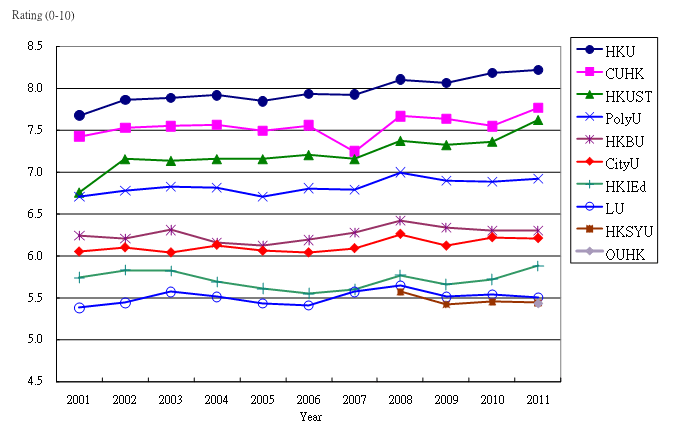
To begin with, all respondents were asked to evaluate each of these institutions based on their perception of its overall performance using a scale of 0-10, with 0 representing the worst, 10 representing the best and 5 being half-half. Respondents were suggested to take into account the institution’s local and international reputation, facilities, campus environment, qualification of its teaching staff, academic research performance, conduct and quality of its students, its learning atmosphere, as well as the diversification and degree of recognition for its courses. Survey results of this year indicated that, in terms of public perception, HKU received the highest mean score of 8.22 as rated by 1,158 respondents, CUHK came second with an average score of 7.77 as rated by 1,153 respondents, whereas HKUST ranked third with a mean score of 7.63 as rated by 1,117 respondents. When compared to the findings obtained from last year’s survey, the order of rankings among all institutions remained exactly the same while the newcomer OUHK ranked last. Among all the institutions, the increments of rating of CUHK and HKUST were tested to be statistically significant at p=0.01 level, while that of HKIEd was significant at p=0.05 level (Table 3). |
| Table 3 - Overall Performance of Institutions |
|
2008 Survey |
2009 Survey |
2010 Survey |
2011 Survey |
||||||
|
Average |
Standard error |
Average |
Standard error |
Average |
Standard error |
Average |
Standard error |
No. of raters |
Recognition |
|
|
|
|
|
|
|
|
|
|
|
1.HKU |
8.11 |
0.04 |
8.07 |
0.04 |
8.19* |
0.04 |
8.22 |
0.04 |
1,158 |
96.4% |
2.CUHK |
7.67 |
0.04 |
7.64 |
0.04 |
7.55 |
0.04 |
7.77** |
0.04 |
1,153 |
96.0% |
3.HKUST |
7.38 |
0.04 |
7.33 |
0.04 |
7.37 |
0.04 |
7.63** |
0.04 |
1,117 |
93.0% |
4.PolyU |
7.00 |
0.04 |
6.90 |
0.04 |
6.89 |
0.04 |
6.92 |
0.04 |
1,134 |
94.4% |
5.HKBU |
6.42 |
0.04 |
6.34 |
0.04 |
6.30 |
0.04 |
6.30 |
0.04 |
1,119 |
93.2% |
6.CityU |
6.26 |
0.04 |
6.12* |
0.04 |
6.22 |
0.04 |
6.21 |
0.04 |
1,093 |
91.0% |
7.HKIEd |
5.77 |
0.05 |
5.66 |
0.05 |
5.72 |
0.05 |
5.88* |
0.05 |
1,017 |
84.7% |
8.LU |
5.65 |
0.05 |
5.51* |
0.05 |
5.54 |
0.05 |
5.50 |
0.05 |
1,054 |
87.7% |
9.HKSYU |
5.57 |
0.05 |
5.42 |
0.05 |
5.45 |
0.05 |
5.44 |
0.05 |
1,023 |
85.2% |
10.OUHK# |
N.A. |
5.43 |
0.05 |
1,001 |
83.4% |
|||||
| Same as last year, our cross-tabulation analyses showed that, within each sub-group of the sample, the order of rankings of the universities were basically the same regardless of respondents’ education attainment and occupation. Only some insignificant differences were observed which are enclosed in squares below. For the actual ratings obtained by each institution as rated by each sub-group, please refer to the tables below (Tables 4-5). |
| Table 4 – Cross-tabulation Analyses: Institution Performance by Education Attainment of Respondents |
|
Primary or below |
Secondary |
Tertiary or above |
||||||
|
Average |
Standard error |
No. of raters |
Average |
Standard error |
No. of raters |
Average |
Standard error |
No. of raters |
1.HKU |
8.35 |
0.134 |
155 |
8.19 |
0.059 |
557 |
8.23 |
0.056 |
443 |
2.CUHK |
7.78 |
0.129 |
147 |
7.70 |
0.058 |
559 |
7.85 |
0.055 |
443 |
3.HKUST^ |
7.63 |
0.159 |
137 |
7.46 |
0.068 |
537 |
7.83 |
0.056 |
439 |
4.PolyU^ |
7.34 |
0.134 |
142 |
6.85 |
0.060 |
547 |
6.88 |
0.053 |
440 |
5.HKBU^ |
6.79 |
0.132 |
136 |
6.24 |
0.064 |
538 |
6.25 |
0.055 |
441 |
6.CityU^ |
6.73 |
0.147 |
128 |
6.07 |
0.063 |
522 |
6.23 |
0.057 |
440 |
7.HKIEd^ |
6.55 |
0.175 |
105 |
5.96 |
0.070 |
491 |
5.61 |
0.066 |
417 |
8.LU^ |
5.97 |
0.170 |
120 |
5.54 |
0.071 |
511 |
5.34 |
0.065 |
419 |
9.HKSYU^ |
6.17 |
0.177 |
115 |
5.50 |
0.077 |
487 |
5.18 |
0.066 |
417 |
10.OUHK^ |
6.11 |
0.194 |
96 |
5.57 |
0.070 |
486 |
5.12 |
0.069 |
415 |
| ^ Differences among sub-groups tested to be statistically significant at 95% confidence level. |
| Table 5a – Cross-tabulation Analyses: Institution Performance by Occupation of Respondents (I) |
|
Professionals and semi-professionals |
Clerk and service workers |
Production workers |
||||||
|
Average |
Standard error |
No. of raters |
Average |
Standard error |
No. of raters |
Average |
Standard error |
No. of raters |
1.HKU^ |
8.35 |
0.061 |
353 |
8.01 |
0.087 |
212 |
7.97 |
0.158 |
96 |
2.CUHK |
7.86 |
0.061 |
354 |
7.54 |
0.086 |
212 |
7.75 |
0.146 |
96 |
3.HKUST^ |
7.82 |
0.066 |
348 |
7.31 |
0.103 |
209 |
7.40 |
0.173 |
91 |
4.PolyU |
6.85 |
0.063 |
351 |
6.83 |
0.095 |
210 |
6.98 |
0.130 |
93 |
5.HKBU^ |
6.11 |
0.070 |
352 |
6.25 |
0.091 |
209 |
6.35 |
0.124 |
91 |
6.CityU |
6.20 |
0.065 |
346 |
6.14 |
0.099 |
208 |
6.04 |
0.132 |
87 |
7.HKIEd^ |
5.67 |
0.076 |
328 |
5.78 |
0.109 |
193 |
5.79 |
0.142 |
87 |
8.LU^ |
5.32 |
0.078 |
335 |
5.55 |
0.108 |
198 |
5.65 |
0.183 |
85 |
9.HKSYU^ |
5.22 |
0.079 |
332 |
5.29 |
0.113 |
192 |
5.55 |
0.165 |
81 |
10.OUHK^ |
5.22 |
0.079 |
332 |
5.56 |
0.110 |
193 |
5.65 |
0.156 |
79 |
| Table 5b – Cross-tabulation Analyses: Institution Performance by Occupation of Respondents (II) |
|
Students |
Housewives |
||||
|
Average |
Standard error |
No. of raters |
Average |
Standard error |
No. of raters |
1.HKU^ |
7.95 |
0.124 |
92 |
8.26 |
0.133 |
141 |
2.CUHK |
7.89 |
0.121 |
92 |
7.72 |
0.130 |
141 |
3.HKUST^ |
7.46 |
0.130 |
92 |
7.77 |
0.141 |
130 |
4.PolyU |
6.88 |
0.119 |
91 |
6.96 |
0.130 |
138 |
5.HKBU^ |
6.43 |
0.121 |
91 |
6.33 |
0.137 |
131 |
6.CityU |
6.18 |
0.141 |
92 |
6.21 |
0.132 |
127 |
7.HKIEd^ |
5.67 |
0.156 |
85 |
6.09 |
0.162 |
120 |
8.LU^ |
5.34 |
0.160 |
89 |
5.50 |
0.137 |
127 |
9.HKSYU^ |
5.15 |
0.159 |
88 |
5.58 |
0.161 |
115 |
10.OUHK^ |
5.08 |
0.175 |
87 |
5.31 |
0.163 |
117 |
B. Overall Performance of Vice-Chancellors/Presidents/Principals |
| With respect to the perceived overall performance of the Vice-Chancellor/President/Principal of each institution, taking into consideration one’s local and international reputation, approachability, leadership, vision, social credibility and public relations, newcomer Professor Joseph S.Y. Sung of CUHK topped the list this year with an average score of 7.84 as rated by 990 respondents. Professor Lap-chee Tsui of HKU and Professor Tony F. Chan of HKUST came second and third, with a respective mean score of 7.73 rated by 877 respondents and 7.14 rated by 635 respondents. The next tier included Professor Timothy W. Tong of PolyU, Dr Chi-yung Chung of HKSYU and Professor Anthony B.L. CHEUNG who ranked forth to sixth attaining a mean score of 6.61, 6.52 and 6.34 respectively. The seventh to tenth ranks fell to the Presidents/Principals of HKBU, CityU, LU and OUHK correspondingly, with an average score ranging from 5.96 to 6.29. Most of the performance rating of the Vice-Chancellors / Presidents / Principals registered increase when compared to last year’s, if any. Yet, only four out of ten Vice-Chancellors / Presidents / Principals had obtained recognition rates of 50% or above. Of which, Professor Joseph S.Y. Sung of CUHK received the highest recognition rate of 82% (Table 6). |
| Table 6 - Overall Performance of Vice-Chancellors / Presidents / Principals |
|
2008 Survey |
2009 Survey |
2010 Survey |
2011 Survey |
||||||
|
||||||||||
Avg. |
Std. |
Avg. |
Std. |
Avg. |
Std. |
Avg. |
Std. |
No of raters |
Recognition |
|
1.CUHK – Joseph S.Y. SUNG# |
-N.A.- |
7.84 |
0.05 |
990 |
82.5% |
|||||
2.HKU – Lap-chee TSUI |
7.67 |
0.05 |
7.58 |
0.05 |
7.67 |
0.05 |
7.73 |
0.05 |
877 |
73.1% |
3.HKUST – Tony F. CHAN# |
-N.A.- |
6.87 |
0.05 |
7.14 |
0.06 |
635 |
52.9% |
|||
4.PolyU – Timothy W. TONG |
-N.A.- |
6.59 |
0.06 |
6.50 |
0.06 |
6.61 |
0.06 |
545 |
45.4% |
|
5.HKSYU – Chi-yung CHUNG |
6.61 |
0.07 |
6.57 |
0.06 |
6.46 |
0.06 |
6.52 |
0.07 |
564 |
47.0% |
6.HKIEd – Anthony B.L. CHEUNG |
6.25 |
0.06 |
6.28 |
0.05 |
6.16 |
0.05 |
6.34 |
0.05 |
734 |
61.1% |
7.HKBU – Albert CHAN# |
-N.A.- |
6.29 |
0.06 |
530 |
44.1% |
|||||
8.CityU – Way KUO |
6.23 |
0.07 |
6.21 |
0.06 |
6.17 |
0.05 |
6.23 |
0.06 |
533 |
44.4% |
9.LU – Yuk-shee CHAN |
6.15 |
0.07 |
6.07 |
0.06 |
6.07 |
0.06 |
6.04 |
0.07 |
512 |
42.6% |
10.OUHK – John C.Y. LEONG## |
-N.A.- |
5.96 |
0.07 |
504 |
42.0% |
|||||
| When cross-tabulated by respondents’ education attainment and occupation, slight variations were obtained in terms of the respective rankings of the Vice-Chancellors / Presidents / Principals as rated by different sub-groups, though many scores fluctuated within error margins. They were enclosed in squares for easy reference. Actual ratings obtained by each Vice-Chancellors / Presidents / Principals are shown in the following tables (Tables 7-8). |
| Table 7 – Cross-tabulation Analyses: Vice-Chancellors / Presidents / Principals Performance by Education Attainment of Respondents |
|
Primary or below |
Secondary |
Tertiary or above |
||||||
|
Average |
Standard error |
No. of raters |
Average |
Standard error |
No. of raters |
Average |
Standard error |
No. of raters |
1.CUHK – Joseph S.Y. SUNG |
7.94 |
0.175 |
117 |
7.79 |
0.066 |
471 |
7.86 |
0.066 |
401 |
2.HKU – Lap-chee TSUI |
8.00 |
0.167 |
99 |
7.71 |
0.071 |
407 |
7.68 |
0.067 |
371 |
3.HKUST – Tony F. CHAN |
7.26 |
0.218 |
57 |
7.19 |
0.089 |
296 |
7.08 |
0.081 |
281 |
4.PolyU – Timothy W. TONG |
7.02 |
0.243 |
41 |
6.65 |
0.093 |
255 |
6.50 |
0.076 |
248 |
5.HKSYU – Chi-yung CHUNG |
6.85 |
0.252 |
57 |
6.46 |
0.107 |
261 |
6.52 |
0.096 |
245 |
6.HKIEd – Anthony B.L. CHEUNG^ |
6.80 |
0.203 |
75 |
6.34 |
0.079 |
343 |
6.23 |
0.080 |
314 |
7.HKBU – Albert CHAN^ |
6.82 |
0.252 |
48 |
6.34 |
0.089 |
255 |
6.12 |
0.082 |
226 |
8.CityU – Way KUO |
6.57 |
0.234 |
42 |
6.21 |
0.100 |
242 |
6.20 |
0.080 |
248 |
9.LU – Yuk-shee CHAN^ |
6.61 |
0.280 |
47 |
6.02 |
0.101 |
246 |
5.95 |
0.088 |
217 |
10.OUHK – John C.Y. LEONG^ |
6.66 |
0.316 |
43 |
6.04 |
0.097 |
239 |
5.76 |
0.099 |
221 |
| Table 8a – Cross-tabulation Analyses: Vice-Chancellors / Presidents / Principals Performance by Occupation of Respondents (I) |
|
Professionals and |
Clerk and service workers |
Production workers |
||||||
|
Average |
Standard error |
No. of raters |
Average |
Standard error |
No. of raters |
Average |
Standard error |
No. of raters |
1.CUHK – Joseph S.Y. SUNG |
7.92 |
0.072 |
319 |
7.75 |
0.105 |
182 |
7.77 |
0.188 |
70 |
2.HKU – Lap-chee TSUI^ |
7.73 |
0.073 |
293 |
7.52 |
0.118 |
159 |
7.41 |
0.214 |
65 |
3.HKUST – Tony F. CHAN |
7.16 |
0.088 |
225 |
6.93 |
0.147 |
116 |
7.05 |
0.203 |
50 |
4.PolyU – Timothy W. TONG^ |
6.54 |
0.089 |
199 |
6.41 |
0.165 |
97 |
6.79 |
0.210 |
39 |
5.HKSYU – Chi-yung CHUNG^ |
6.56 |
0.116 |
187 |
6.03 |
0.161 |
113 |
5.96 |
0.248 |
36 |
6.HKIEd – Anthony B.L. CHEUNG^ |
6.28 |
0.089 |
264 |
6.10 |
0.126 |
137 |
5.94 |
0.194 |
59 |
7.HKBU – Albert CHAN |
6.25 |
0.090 |
176 |
6.19 |
0.144 |
110 |
6.26 |
0.244 |
35 |
8.CityU – Way KUO |
6.10 |
0.102 |
187 |
6.13 |
0.142 |
96 |
5.97 |
0.207 |
38 |
9.LU – Yuk-shee CHAN |
5.92 |
0.104 |
169 |
5.96 |
0.147 |
111 |
6.27 |
0.289 |
38 |
10.OUHK – John C.Y. LEONG^ |
5.76 |
0.116 |
174 |
5.93 |
0.158 |
103 |
5.81 |
0.218 |
37 |
| Table 8b – Cross-tabulation Analyses: Vice-Chancellors / Presidents / Principals Performance by Occupation of Respondents (II) |
|
Students |
Housewives |
||||
|
Average |
Standard error |
No. of raters |
Average |
Standard error |
No. of raters |
1.CUHK – Joseph S.Y. SUNG |
7.46 |
0.155 |
79 |
7.96 |
0.150 |
122 |
2.HKU – Lap-chee TSUI^ |
7.30 |
0.143 |
67 |
7.77 |
0.157 |
98 |
3.HKUST – Tony F. CHAN |
6.82 |
0.171 |
51 |
7.26 |
0.221 |
60 |
4.PolyU – Timothy W. TONG^ |
6.43 |
0.179 |
44 |
6.60 |
0.190 |
57 |
5.HKSYU – Chi-yung CHUNG^ |
6.30 |
0.200 |
44 |
6.83 |
0.207 |
61 |
6.HKIEd – Anthony B.L. CHEUNG^ |
6.09 |
0.189 |
45 |
6.44 |
0.165 |
76 |
7.HKBU – Albert CHAN |
6.18 |
0.173 |
41 |
6.31 |
0.193 |
59 |
8.CityU – Way KUO |
6.37 |
0.155 |
49 |
6.31 |
0.214 |
57 |
9.LU – Yuk-shee CHAN |
5.87 |
0.218 |
41 |
6.31 |
0.228 |
55 |
10.OUHK – John C.Y. LEONG^ |
5.62 |
0.246 |
35 |
6.31 |
0.210 |
57 |
C. Perceived Deficiencies among the University Students in Hong Kong |
| The next question was to gauge respondents’ opinion on the qualities which most Hong Kong university students lack of. This year’s results have consistently showed that “work attitude” topped the list with 19% of respondents citing it. “Social/interpersonal skills” and “conduct, honesty” obtained the second and third ranks and were mentioned by 12% and 11% of the total sample respectively. Other commonly-cited qualities included “critical thinking and problem-solving ability”, “independence”, and “proficiency in Chinese, English and Putonghua”, accounting for 8% to 9% of the total sample. Meanwhile, 17% of the respondents could not give a definite answer (Table 9). |
| Table 9 – Perceived Deficiencies among the University Students in Hong Kong |
|
2009 Survey |
2010 Survey |
2011 Survey |
||
|
% of |
% of |
Freq. |
% of total responses |
% of |
Work attitude (e.g. serious, enthusiastic, diligent, responsible, motivated) |
20.9%** |
23.9% |
232 |
11.4% |
19.3%** |
Social/interpersonal skills |
11.7% |
12.5% |
143 |
7.1% |
11.9% |
Conduct, honesty |
12.5% |
10.7% |
137 |
6.8% |
11.4% |
Critical thinking and problem-solving ability |
8.1%* |
8.8% |
113 |
5.6% |
9.4% |
Independence |
6.7%** |
7.9% |
107 |
5.3% |
8.9% |
Proficiency in Chinese, English & Putonghua |
13.4% |
9.1%** |
96 |
4.8% |
8.0% |
|
|
|
|
|
|
Commitment to society |
7.0% |
9.3%* |
89 |
4.4% |
7.4%* |
Global prospect / foresight |
10.2% |
8.7% |
87 |
4.3% |
7.3% |
Social/work experience |
7.3% |
5.8% |
76 |
3.8% |
6.4% |
Communication skills |
4.6% |
4.7% |
62 |
3.0% |
5.1% |
Academic and professional knowledge |
9.2%* |
4.7%** |
59 |
2.9% |
4.9% |
Discipline, patience |
- |
-- |
57 |
2.8% |
4.7% |
Self-confidence |
4.6% |
5.1% |
55 |
2.7% |
4.6% |
Emotion stability |
2.7% |
3.0% |
45 |
2.2% |
3.8% |
Alertness to risk / handling adverse conditions |
3.4%** |
2.5% |
45 |
2.2% |
3.7%* |
Civil awareness |
3.7%** |
4.5% |
44 |
2.2% |
3.7% |
Self-motivation, aggressiveness |
- |
-- |
44 |
2.2% |
3.7% |
Creativity |
3.6% |
2.8% |
41 |
2.0% |
3.4% |
|
|
|
|
|
|
All-roundness |
4.7%** |
3.5% |
34 |
1.7% |
2.8% |
Self-expectations / dreams |
1.6% |
2.7% |
30 |
1.5% |
2.5% |
Job opportunity |
2.3% |
2.8% |
28 |
1.4% |
2.3% |
Humble / sympathy |
- |
-- |
24 |
1.2% |
2.0% |
Politeness |
- |
-- |
22 |
1.1% |
1.8% |
Resources / opportunity |
- |
-- |
21 |
1.0% |
1.7% |
Utilitarian / materialistic |
- |
-- |
16 |
0.8% |
1.3% |
Financial management |
1.9% |
0.4%** |
13 |
0.6% |
1.1%* |
Patriotism |
1.1% |
1.1% |
8 |
0.4% |
0.6% |
Leadership skills |
0.5% |
0.5% |
6 |
0.3% |
0.5% |
Cultural level / self-cultivation |
0.0% |
2.2% |
-- |
-- |
-- |
|
|
|
|
|
|
Nothing |
3.6% |
3.9% |
58 |
2.8% |
4.8% |
Others |
2.4% |
0.7% |
32 |
1.6% |
2.6%** |
Don’t know / hard to say |
15.8%** |
17.9% |
203 |
10.0% |
16.9% |
|
|
|
|
|
|
Total |
|
|
2,026 |
100.0% |
|
|
|
|
|
|
|
Base |
1,197 |
1,204 |
1,201 |
|
|
Missing case(s) |
4 |
4 |
0 |
|
|
D. Preference for University Graduates |
| The survey went on to study employers’ preference when selecting university graduates. To identify the prospective employers from the sample, all respondents were asked if they were involved in any recruitment process of new staff in performing their office duties. Results showed that 18% of the total sample, i.e. 221 respondents had such authority in one way or another. This percentage has remained rather stable in the past few years (Table 10). |
| Table 10 - Involvement in Recruitment of New Staff (Teachers included) |
|
2008 Survey |
2009 Survey |
2010 Survey |
2011 Survey |
|
|
Percentage |
Percentage |
Percentage |
Frequency |
Percentage |
|
|
|
|
|
|
Yes |
16.0% |
18.1% |
17.3% |
221 |
18.4% |
No |
84.0% |
81.9% |
82.7% |
980 |
81.6% |
|
|
|
|
|
|
Total |
100.0% |
100.0% |
100.0% |
1,201 |
100.0% |
|
|
|
|
|
|
Base |
1,212 |
1,201 |
1,208 |
1,201 |
|
Missing case(s) |
1 |
3 |
0 |
0 |
|
| These respondents were further asked which institution’s graduates would be preferred when they looked for a new employee. For ten consecutive years, graduates of HKU ranked first in the row again, as chosen by 25% of these employers whereas CUHK and PolyU came second and third with 14% each. Meanwhile, graduates from HKUST were preferred by 12% of this sub-sample. Another 18% of these prospective employers said they had no particular preference and 7% could not give a definite answer. It has to be noted that because of the small sub-sample, the maximum sampling error has increased to plus/minus 6.7 percentage points at 95% confidence level (Table 11). |
| Table 11 - Most Preferred University Graduates |
|
2008 Survey |
2009 Survey |
2010 Survey |
2011 Survey |
||
|
% of |
% of |
% of |
Freq. |
% of potential employers |
% of |
HKU |
3.8% |
4.3% |
3.6% |
55 |
24.8% |
4.5% |
CUHK |
1.4% |
1.8% |
3.0% |
31 |
14.2% |
2.6% |
PolyU |
2.5% |
2.8% |
1.9% |
30 |
13.5% |
2.5% |
HKUST |
1.1% |
2.4% |
1.4% |
27 |
12.4% |
2.3% |
|
|
|
|
|
|
|
CityU^ |
0.0% |
0.2% |
0.4% |
4 |
1.8% |
0.3% |
LU |
0.1% |
0.2% |
0.1% |
3 |
1.5% |
0.3% |
HKBU |
0.4% |
0.2% |
0.4% |
2 |
1.1% |
0.2% |
HKIEd |
0.3% |
0.3% |
0.3% |
2 |
0.9% |
0.2% |
HKSYU |
0.1% |
0.4% |
0.3% |
1 |
0.5% |
0.1% |
|
|
|
|
|
|
|
Other overseas universities |
0.5% |
0.3% |
0.3% |
3 |
1.6% |
0.3% |
Others |
0.4% |
0.1% |
0.1% |
1 |
0.4% |
0.1% |
|
|
|
|
|
|
|
No preference |
3.3% |
2.5% |
3.6% |
40 |
18.0% |
3.3% |
Don’t know / hard to say |
1.8% |
1.9% |
1.4% |
15 |
6.7% |
1.2% |
Won’t employ graduates |
0.3% |
0.8% |
0.5% |
6 |
2.7% |
0.5% |
|
|
|
|
|
|
|
Total |
|
|
|
220 |
100.0% |
|
|
|
|
|
|
|
|
Valid Base |
194 |
217 |
209 |
221 |
|
|
Missing case(s) |
0 |
1 |
0 |
1 |
|
|
| These potential employers were then asked to provide some reasons for their specific choices. Same as previous years, “good performance of previous graduates” was most frequently cited, by 50% of the sub-sample (i.e. 7% of the total sample). “Good knowledge in job-related areas” came second with 22% (i.e. 3% of the total sample). Graduates’ “good work attitude”, “reputation” of university and their “diligence, motivation” formed the next tier, with a respective proportion of 16%, 14% and 12% (i.e. each accounted for 2% of the total sample). Other than these, reasons like “good language ability”, “alumni” and “good social relationship” were also mentioned by quite some, though not many, respondents (Table 12). |
| Table 12 - Reasons for Preferring Graduates of a Particular Institution |
|
2008 Survey |
2009 Survey |
2010 Survey |
|||
|
% of |
% of |
Freq. |
% of total responses |
% of valid respondents (Base = 157) |
% of total sample |
|
|
|
|
|
|
|
Good performance of previous graduates |
5.0% |
3.5% |
79 |
33.3% |
50.0% |
6.5% |
Good knowledge in job-related areas |
3.4% |
3.8% |
35 |
14.7% |
22.1% |
2.9% |
|
|
|
|
|
|
|
Good work attitude |
1.1% |
2.0% |
25 |
10.8% |
16.2% |
2.1% |
Reputation |
2.6% |
2.5% |
22 |
9.5% |
14.2% |
1.9% |
Diligent, motivated |
1.1% |
1.2% |
18 |
7.7% |
11.5% |
1.5% |
Good language ability |
1.1% |
1.1% |
14 |
6.1% |
9.1% |
1.2% |
Alumni |
0.8% |
1.1% |
10 |
4.1% |
6.1% |
0.8% |
Good social relationship |
0.6% |
1.0% |
7 |
2.9% |
4.3% |
0.6% |
|
|
|
|
|
|
|
Good connection with outside (e.g., a university’s extensive connection with enterprises, companies, or industrial firms; large number of graduates) |
0.3% |
0.6% |
7 |
2.8% |
4.2% |
0.5% |
Salary matched with abilities |
0.1% |
0.4% |
7 |
2.8% |
4.2% |
0.5% |
Good leadership |
0.1% |
0.5% |
2 |
0.8% |
1.2% |
0.2% |
|
|
|
|
|
|
|
Others |
1.0% |
0.3% |
10 |
4.1% |
6.1% |
0.8% |
Don’t know / hard to say |
0.0% |
0.1% |
1 |
0.5% |
0.8% |
0.1% |
|
|
|
|
|
|
|
Total |
|
|
236 |
100.0% |
|
|
|
|
|
|
|
|
|
Valid Base |
154 |
142 |
157 |
|
|
|
Missing case(s) |
0 |
0 |
2 |
|
|
|
Chart - Overall Performance Ratings of Institutions, 2001-2011 |